 Owner@dscareers.site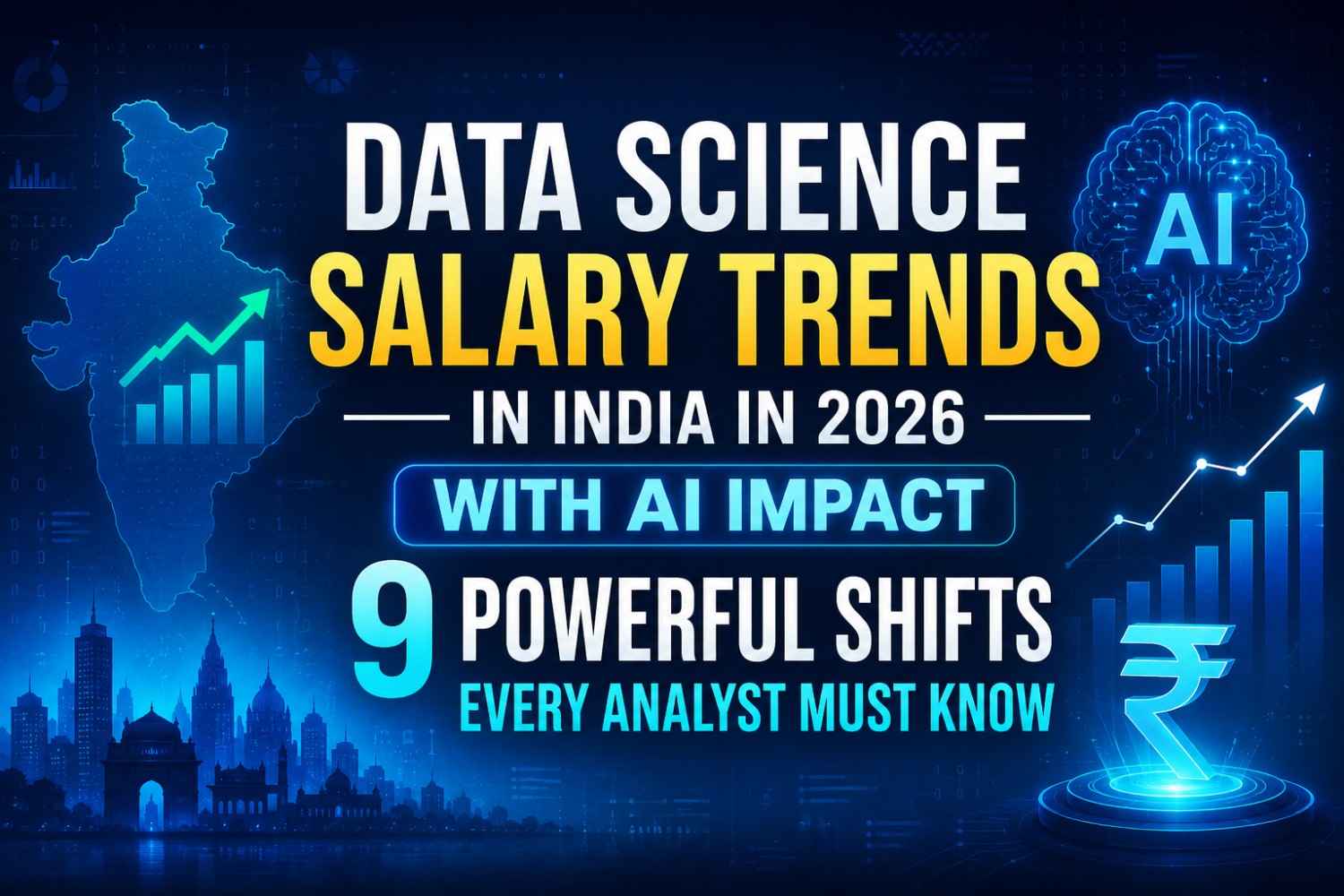
There is a question haunting every data professional in India right now: will artificial intelligence eventually replace us, or will it make us more valuable? The answer lies in understanding the data science salary trends in India in 2026 with AI impact—and the picture that emerges is far more exciting than most people expect.
The data science salary trends in India for 2026 with AI impact tell a story of disruption, opportunity, and massive salary growth for those who adapt. In this article, we break down where salaries stand today, how AI is reshaping the profession, which roles are growing fastest, and what Indian data professionals must do to stay ahead of the curve in 2026 and beyond.
Where Do Data Science Salaries Stand in India in 2026?
Before understanding the data science salary trends in India in 2026 with AI impact, let us establish the current salary baseline across experience levels:
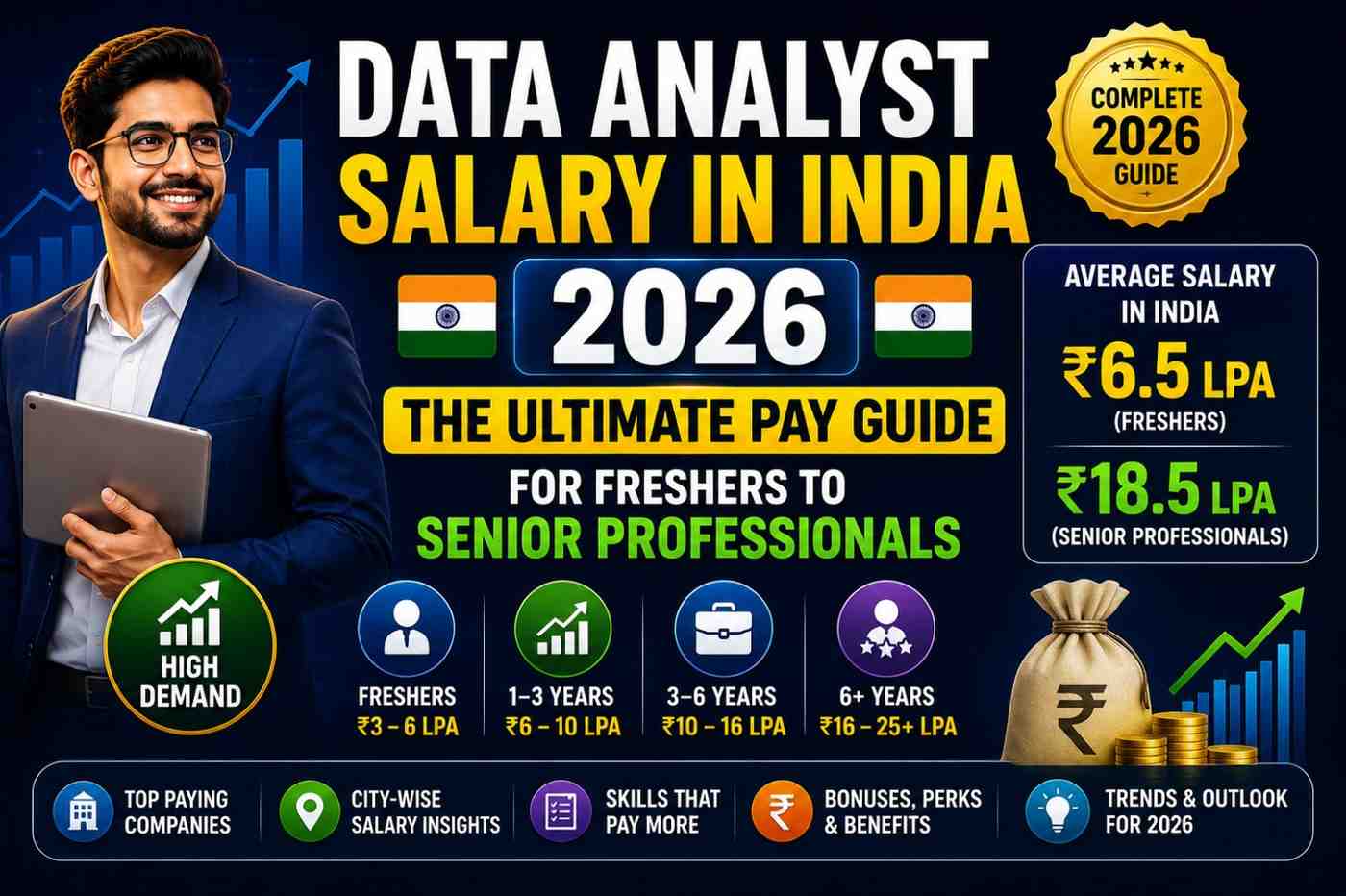
Data Analyst (0–2 years): ₹4 LPA – ₹9 LPA
Data Analyst (2–5 years): ₹9 LPA – ₹18 LPA
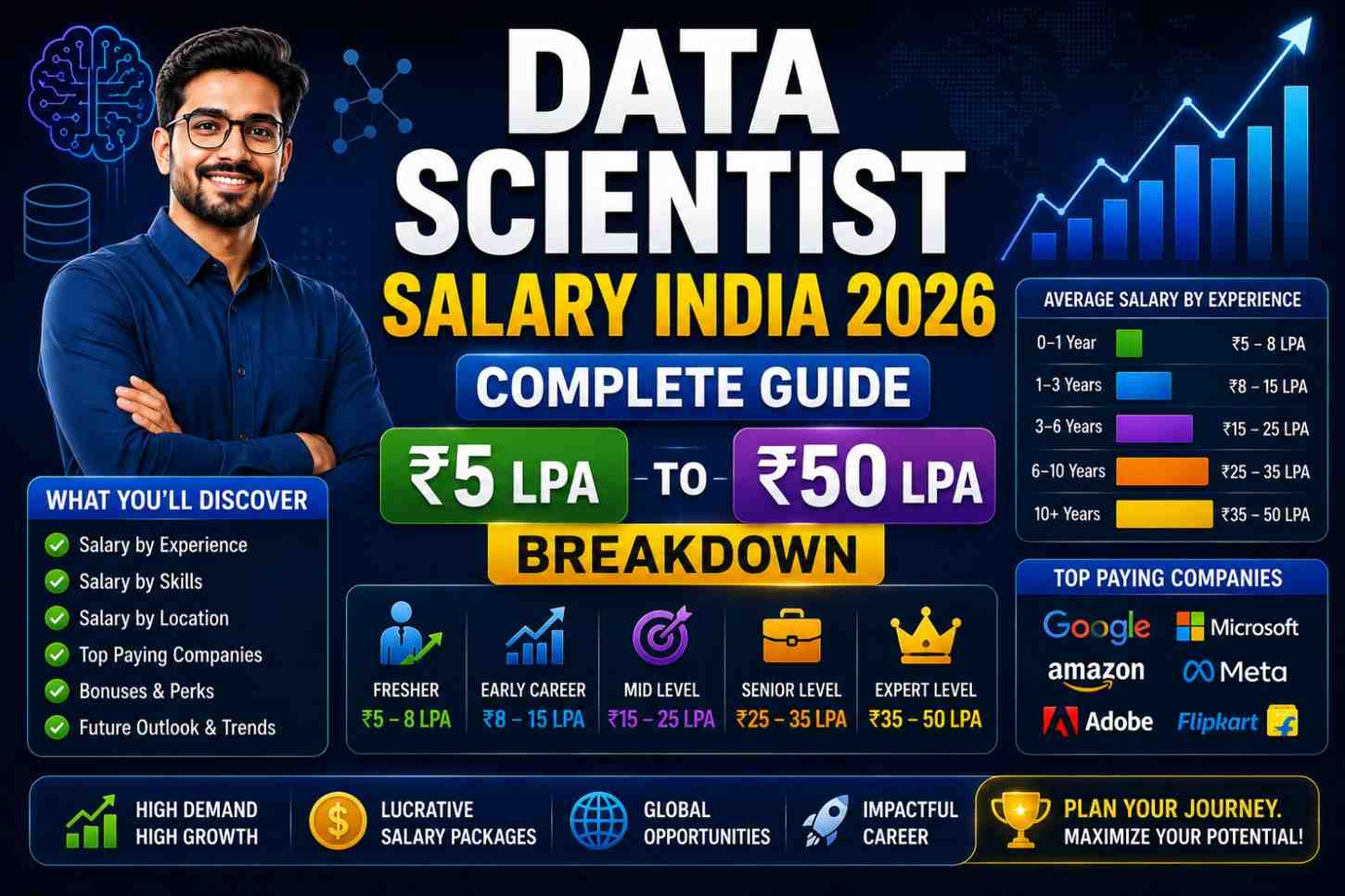
Data Scientist (3–6 years): ₹14 LPA – ₹28 LPA
Senior Data Scientist (6–10 years): ₹25 LPA – ₹45 LPA
Lead Data Scientist / ML Engineer: ₹35 LPA – ₹70 LPA
Head of Data / Chief Data Officer: ₹60 LPA – ₹1.5 Crore+
According to Analytics India Magazine, the demand for data professionals in India has grown over 40% between 2023 and 2026, with salaries in AI-adjacent roles growing the fastest.
The data science salary trends in India for 2026 with AI impact show that the top of the market is pulling away—creating enormous salary differences between those who embrace AI tools and those who do not.
The AI Factor — How Artificial Intelligence Is Reshaping Data Science Salaries
The most critical aspect of data science salary trends in India in 2026 with AI impact is understanding what AI is doing to the profession—both in terms of automation and amplification.
What AI Is Automating:
- Routine data cleaning and preparation tasks
- Basic report generation and dashboard updates
- Simple statistical analysis and summary outputs
- Standard data pipeline monitoring and anomaly alerts
These tasks, which consumed 40–60% of a junior analyst’s time two years ago, are now being handled by tools like GitHub Copilot, Julius AI, and LLM-powered analytics platforms.
What AI Is Amplifying:
- Complex business problem formulation
- Advanced statistical modelling and interpretation
- Cross-functional data storytelling
- Strategic recommendation development
- AI model oversight, validation, and governance
The data science salary trends in India for 2026 with AI impact show that analysts who can do both—use AI tools efficiently AND provide strategic human judgment—are commanding salaries 30%–50% higher than peers who resist AI adoption.
9 Powerful Data Science Salary Trends India 2026 with AI Impact
Here are the nine most significant data science salary trends in India for 2026 with AI impact that every professional must understand:
Trend 1: AI Tool Proficiency is Now a Salary Multiplier
Analysts fluent in ChatGPT for analysis, GitHub Copilot for code, and LLM APIs for automation earn 25%–40% more than those without these skills. The data science salary trends in India for 2026 with AI impact confirm that AI fluency is no longer optional.
Trend 2: Generative AI Roles Are Commanding Premium Pay
New job titles like “AI Analyst,” “Prompt Engineer—Analytics,” and “LLM Fine-Tuning Specialist” are paying ₹20 LPA–₹50 LPA even for mid-level professionals.
Trend 3: Traditional BI Roles Are Being Restructured
Pure reporting roles with no analytical depth are declining. The data science salary trends in India for 2026 with AI impact show that companies are merging BI analyst and data analyst roles into higher-paying “analytics engineer” positions.
Trend 4: MLOps and Data Engineering are the Fastest Growing
ML engineers and data engineers are seeing 20%–35% salary growth year-over-year. These roles sit at the intersection of data science and software engineering—and AI has increased demand for both.
Trend 5: Domain Specialisation Commands a Premium
Analysts who combine data skills with domain expertise in fintech, healthcare, or supply chain are earning ₹5 LPA – ₹10 LPA more than generalist analysts at the same experience level.
Trend 6: AI Governance and Ethics Roles Are Emerging
As companies deploy AI at scale, they need professionals to oversee model fairness, data privacy, and regulatory compliance. These niche roles pay ₹25 LPA – ₹60 LPA and are severely undersupplied.
Trend 7: The Mid-Level Salary Gap Is Widening
The data science salary trends in India for 2026 with AI impact show a growing gap between mid-level analysts who upskill continuously (₹18 LPA – ₹30 LPA) and those who stagnate (₹10 LPA – ₹14 LPA).
Trend 8: Remote Work Is Pulling Indian Salaries Up
Indian data scientists working remotely for US or European companies are earning ₹40 LPA – ₹90 LPA without relocating. This is influencing domestic Indian salary benchmarks upward as local companies compete.
Trend 9: Education Credentials Matter Less; Skills and Portfolio Matter More
A strong GitHub, active Kaggle profile, and demonstrable AI project experience now outweigh an MBA or B.Tech in terms of salary negotiation power. The data science salary trends in India for 2026 with AI impact mark a clear shift from credentials to demonstrated competency.
Will AI Replace Data Analysts in India? An Honest Assessment
The most feared aspect of data science salary trends in India in 2026 with AI impact is job replacement. Here is an honest, sector-by-sector assessment:
Roles at Highest Risk of AI Automation:
- Manual data entry and cleaning analysts (high risk)
- Basic report generation specialists (high risk)
- Dashboard maintenance roles without analytical depth (moderate-high risk)
Roles That Are Safe and Growing:
- Strategic data analysts who translate data into business decisions (very safe)
- Machine learning engineers building AI systems (growing rapidly)
- Data storytellers and visualisation experts (safe)
- Domain-specific analysts (fintech, healthcare, supply chain) (very safe)
- AI governance and ethics professionals (booming)
The net verdict: AI is not replacing data professionals wholesale. It is replacing the routine parts of the job while massively amplifying the value of the strategic, creative, and interpretive parts. For adaptable professionals, the data science salary trends in India for 2026 with AI impact point firmly upward.
Industry-Wise Salary Trends in 2026
The data science salary trends in India for 2026 with AI impact vary sharply by industry:
Banking, Financial Services & Insurance (BFSI):
AI-powered fraud detection and credit risk modeling have made data scientists in this sector among the highest paid in India. Senior roles touch ₹40 LPA – ₹70 LPA.
E-commerce and Retail Tech:
Demand for recommendation systems, demand forecasting, and pricing optimization has pushed mid-level data scientist salaries to ₹18 LPA – ₹30 LPA.
Healthcare and Pharma Tech:
AI in diagnostics and drug discovery is creating new high-value roles. Salaries range from ₹12 LPA (analyst) to ₹50 LPA+ (senior ML researchers).
IT Services:
Slower to adopt cutting-edge AI but compensating with volume hiring. Salaries lag behind product companies by 30%–40%.
SaaS and Product Startups:
The highest salary variance—ranging from ₹10 LPA to ₹80 LPA+ with ESOPs—but also the highest learning velocity.
What Skills Will Define Salary Growth in 2026 and Beyond?
Based on data science salary trends in India for 2026 with AI impact, these are the skills that will define who earns the most:
Python with ML libraries: scikit-learn, TensorFlow, PyTorch
LLM and Generative AI: OpenAI API, LangChain, Hugging Face
Cloud platforms: AWS SageMaker, Google Vertex AI, Azure ML
Data engineering: Apache Spark, dbt, Airflow, Kafka
Statistical depth: Bayesian modelling, causal inference, A/B testing design
Business communication: Translating model outputs into executive-level decisions
Internal Resources to Read Next
- Data Analyst vs. Data Scientist—Which Career Pays More in India in 2026?
- Top AI Tools Every Data Analyst Must Learn in 2026
- How to Transition from Data Analyst to Data Scientist in India
5 Frequently Asked Questions (From Google)
Q1. What is the average data science salary in India in 2026?
The average data science salary in India in 2026 ranges from ₹9 LPA for junior roles to ₹45 LPA+ for senior positions. With AI-adjacent skills, senior ML engineers and AI specialists can earn ₹60 LPA – ₹1 crore+ in top product companies and MNCs.
Q2. Will AI replace data analysts and data scientists in India?
AI is automating routine tasks like data cleaning, basic reporting, and simple analysis — but it is simultaneously creating demand for higher-level skills like AI model oversight, strategic analytics, and domain-specific interpretation. Net job displacement in data science is expected to be low; most analysts will see their roles evolve rather than disappear.
Q3. Which data science skills pay the most in India in 2026?
The highest-paying data science skills in India in 2026 are machine learning engineering, LLM/generative AI development, MLOps, cloud data platforms (AWS, GCP, and Azure), and causal inference statistics. Combining these with domain expertise (fintech and healthcare) commands the highest salaries.
Q4. How has AI impacted data analyst salaries in India?
AI has created a significant bifurcation: analysts who adopt AI tools and upskill into higher-value tasks are seeing 30%–50% salary growth, while those who perform only routine analytical work are seeing salary stagnation and increased job insecurity. Adaptability is the defining factor in 2026.
Q5. What is the future of data science careers in India given AI trends?
The future is strong for data professionals who continuously evolve. Demand for AI-literate analysts, ML engineers, data engineers, and AI governance specialists is growing faster than supply. India is positioned to become a global hub for AI talent, and salaries will continue rising for those with the right skills mix through 2026 and beyond.
Conclusion
The data science salary trends in India for 2026 with AI impact tell a clear story: artificial intelligence is not the enemy of the data professional—it is the most powerful tool they have ever been given.
Those who fear AI and resist upskilling will find their roles shrinking and their salaries stagnating. Those who embrace AI tools, build AI-adjacent skills, and position themselves as strategic interpreters of data will experience the most rapid salary growth in the history of Indian tech careers.
The question was never “Will AI replace analysts?” The real question is, “Will you adapt fast enough to ride the AI wave instead of being swept under it?”
In 2026, the choice—and the salary—is entirely in your hands.